About 85 minutes
Through St. Dunstan's to Light — Text and Context
World Events
19,442 recorded words. 2 minutes difference from this book's estimate.
View Gutenberg source #27193
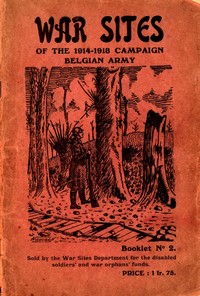
Before opening Notices on the outlasting war sites — Background and Themes, the edition data offers a quick orientation: 19,896 words, 1 hr 27 min estimated reading time, and 22 detected text sections.
The text analysis averages about 22.6 words per sentence, while the detected sections provide another way to judge how the source is divided.
Project Gutenberg metadata also associates the work with “World War, 1914-1918 -- Belgium,” connecting these edition facts with the source record’s subject description.
Explore this collection
These alternatives are selected using recorded categories and estimated reading time.
About 85 minutes
World Events
19,442 recorded words. 2 minutes difference from this book's estimate.
View Gutenberg source #27193About 92 minutes
World Events
21,131 recorded words. 5 minutes difference from this book's estimate.
View Gutenberg source #28060About 76 minutes
World Events
17,431 recorded words. 11 minutes difference from this book's estimate.
View Gutenberg source #10225Search stored excerpts and compare books → Choose by your preferences →
Choices use stored catalog measurements. Estimates vary with reading speed. A shared category is a catalog label, not a claim that two books have the same argument or literary quality.
Search reads excerpt text stored with this catalog and links to its associated Gutenberg record. The connection is stored in the site database; this tool does not recheck that every excerpt is word-for-word identical to that external record. Excerpt search does not cover every chapter and does not verify historical publication dates.
Catalog snapshot checked: 2026-09-25. Coverage: 97 public books, 97 available source excerpts.
Read the complete public-domain text at its original source.
Read on Project GutenbergThe 1923 Belgian Army guide to the Yser front sites opens with a list of 25 numbered positions, each keyed to a 1/100,000 map and illustrated by sketches and photographs from the Army Photographic Service. The notices are not mere inventories; they blend technical descriptions—concrete dugouts, machine-gun pits, observation posts—with narrative passages that recount specific engagements. The voice shifts between the dispassionate tone of a staff officer and the immediacy of a witness, as when describing the German night infiltration into Dixmude on 25–26 October 1914. This dual register gives the booklet a peculiar tension: it is at once a field guide for visitors and a memorial to the violence that shaped these locations.
The notices are organized as a numbered itinerary, but the sequence is not strictly geographical. It begins at the coast—German battery “Wilhelm II” at Knocke, guns on Zeebrugge pier—then moves inland to the Yser river and the Dixmude bridgehead. Each entry typically gives a location, a structural description, and often a tactical note. For instance, the corn-mill at Dixmude is described as serving “the double part of observatory and shelter for the defensive reserves.” The language is functional, yet it occasionally slips into understated drama: the observer “was forced to abandon his post, but nevertheless not without the satisfaction of having registered to the best advantage … the first fires of our artillery.” Such phrasing reveals a pride in the Belgian artillery’s early effectiveness, even in retreat.
The most extended narrative in the excerpts concerns the German incursion into Dixmude on the night of 25–26 October 1914. The account is remarkable for its sensory details: “the night was as black as ink,” the Germans advanced “headed by the Major and accompanied by an enervating music of fifes.” The writer notes the “infamous trick” of forcing captured French and Belgian soldiers to march in front as shields. The prose accelerates as the column crosses the bridge and the machine-gunners open fire: “a muzzle to muzzle fire on the rest of the column which went whirling over and was scattered in the town.” The passage ends with relief when the defenders hear the guns on the bridge road, “proclaiming loudly that the line of the Yser still held good.” This is not dry staff work; it is a battle piece, vivid and partisan.
The booklet’s illustrations—a map, four sketches, thirteen photographs—are integral to its purpose. The text repeatedly directs the reader to the map coordinates, and the photographs presumably show the sites as they appeared after the war. The notices themselves often read like captions for images that are no longer present in the text excerpt. For example, the entry for the “Boyau de la mort” (Death Trench) and the “Ouvrage du cavalier” includes a German saphead and a concrete dugout, but the photograph is not described. This reliance on visual evidence suggests the notices were designed to be used on site, with the booklet in hand. The language of the notices—precise, locative, occasionally emotional—mirrors the dual function of the photographs: to document and to commemorate.
Readers should approach this booklet as a hybrid document: part military report, part battlefield guide, part memorial. The map and photographs are essential to its use, but the text alone offers a compressed history of the Belgian front. The shifts in register—from inventory to anecdote, from technical to visceral—reflect the difficulty of writing about a landscape still scarred by recent war. The notices do not explain the broader strategy; they assume the reader knows the context. Instead, they direct attention to the physical remnants: a battery, a trench, a mill. For those interested in the material culture of World War I, this is a rare, firsthand record of how the Belgian army wished its war sites to be remembered.
Use these questions to collect your thoughts before moving on.