
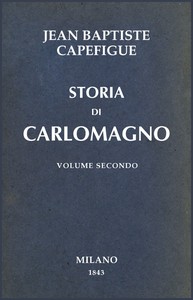
Storia di Carlomagno vol. 2/2 by M. Capefigue
So, you've made it through the rise of Charlemagne in the first volume. Now, in Volume 2, we see what happens after you've won almost everything. The story here is about management, legacy, and survival. Charlemagne isn't just conquering new lands anymore; he's trying to govern a sprawling, messy empire that stretches from modern-day France deep into Germany and Italy. The plot follows his relentless efforts to standardize laws, promote education (the famous 'Carolingian Renaissance'), and spread Christianity, all while putting down rebellions in Saxony, dealing with the complex politics of the Byzantine Empire, and navigating fraught relationships with the Pope in Rome.
The Story
This volume covers the second half of Charlemagne's long reign. We see him crowned Emperor of the Romans on Christmas Day, 800 AD—a moment that changed European history forever. But Capefigue shows us that the glorious ceremony in Rome was just one day. The years that follow are a grind of administration, diplomacy, and military campaigning to secure his borders. The narrative doesn't shy away from the darker aspects, like the brutal enforcement of his rule in Saxony. It also follows the personal disappointments of an aging emperor, particularly the fraught dynamics with his sons, who were supposed to inherit a united realm but often showed more interest in their own power.
Why You Should Read It
What I love about Capefigue's take is that he makes Charlemagne feel less like a marble statue and more like a real, overworked CEO of a continent. You get a sense of the immense pressure he was under. The book highlights the irony of his situation: the more successful he became, the more problems he created for himself. It's a fascinating study in how hard it is to keep a vast political project together. Capefigue, writing in the 19th century, also has a distinct voice—it's detailed and scholarly, but with a clear narrative drive that wants you to understand the man behind the myth.
Final Verdict
This is a book for the patient history lover who wants to go deep. It's perfect for someone who has a basic knowledge of the Middle Ages and wants to understand the pivotal figure who shaped so much of it. You won't find flashy, novel-like prose here; it's a dense, classic historical account. But if you're willing to sit with it, you'll be rewarded with a incredibly thorough and thoughtful portrait of power at its most absolute. Think of it as the definitive, deep-dive biography of Europe's founding father.
This book is widely considered to be in the public domain. It serves as a testament to our shared literary heritage.
Logan Davis
5 months agoI stumbled upon this title and it challenges the reader's perspective in an intellectual way. Truly inspiring.







Richard Robinson
2 years agoI had low expectations initially, however it creates a vivid world that you simply do not want to leave. Definitely a 5-star read.