
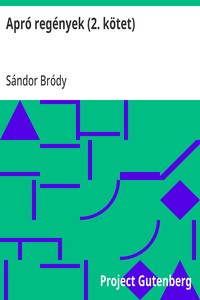
Apró regények (2. kötet) by Sándor Bródy
I stumbled upon Sándor Bródy's work while looking for something different from my usual reads, and this second volume of his 'Small Novels' was a complete surprise. Published in the late 1890s, these stories offer a raw, street-level view of Hungarian society as it stood on the brink of the modern age.
The Story
There isn't one single plot, but a series of vivid, self-contained worlds. Bródy focuses on the middle and lower classes—shopkeepers, clerks, artists, and women with limited options. In one story, a daughter's marriage becomes a tense financial negotiation for her struggling family. In another, a man's obsessive jealousy destroys not just a relationship, but his own sense of self. The settings are often claustrophobic: a modest apartment, a provincial town square, a newspaper office. The drama comes from the characters' inner lives. Bródy shows us their hopes, their calculations, and their quiet resignations. He was known for bringing a new psychological realism to Hungarian literature, and you can feel it on every page. The conflicts are intimate, but they speak to bigger issues of social mobility, gender roles, and the search for authenticity in a rigid world.
Why You Should Read It
First, Bródy is a master of the short form. He doesn't waste a word. He builds a character and a crisis in just a few pages, and the endings often land with a powerful, thought-provoking punch. They make you sit back and think. Second, his characters feel astonishingly modern in their anxieties. The pressure to succeed, the fear of scandal, the longing for a different life—these are struggles we know today, even if the costumes and customs are different. Reading Bródy is like finding a direct line to the human heart across 120 years. He doesn't judge his characters; he presents them with clear-eyed compassion, letting you understand their sometimes-flawed decisions.
Final Verdict
This book is perfect for readers who love classic short story writers like Chekhov or Maupassant, and for anyone curious about Central European literature beyond the usual famous names. It's also a great pick if you enjoy historical fiction that focuses on social detail and psychological depth over swashbuckling adventure. Be prepared for stories that are more bittersweet than happy, but always deeply human. It's a compelling, insightful look at a pivotal moment in time, told through the lives of ordinary people facing extraordinary emotional choices.
This work has been identified as being free of known copyright restrictions. Knowledge should be free and accessible.
Ashley Thompson
9 months agoRecommended.