
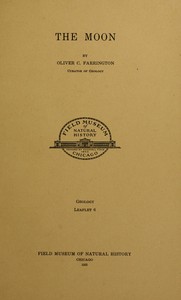
The Moon by Oliver C. Farrington
I picked up Oliver Farrington's The Moon expecting a dry, technical pamphlet. What I got was a surprisingly clear and passionate snapshot of lunar science from 1915. Farrington wasn't just an academic; he was a curator at the Field Museum in Chicago, and his writing has the engaging feel of a great museum exhibit label—designed to educate and spark wonder.
The Story
There's no traditional plot, but there is a clear journey. Farrington acts as our guide, systematically walking us across the lunar surface as it was understood then. He starts with the basics we can see from Earth—the maria (those dark 'seas'), the bright highlands, and the countless craters. Using the best photographs and drawings available from observatories, he describes famous features like the crater Copernicus or the straight 'rays' that streak across the surface. The book then digs into the big questions of the era: Is there air or water on the moon? (Spoiler: Almost certainly not, he concludes.) How were those craters really formed—by volcanoes or by impacts? Farrington carefully weighs the evidence, showing science in action. He ends by connecting the moon to Earth, discussing tides and speculating on the shared history of the two worlds.
Why You Should Read It
This book's magic is in its perspective. You're not just learning 100-year-old facts; you're sitting on the shoulder of a scientist at a pivotal time. Telescopes were getting better, photography was revolutionizing astronomy, and old ideas were being challenged. You can feel Farrington's excitement when he talks about new, detailed images that reveal previously unseen cracks and valleys. His careful reasoning about crater formation is a masterclass in how scientists think. Reading it makes you appreciate how much we've learned, but also how the fundamental questions—'How did this get here?'—remain the same. It’s a humble reminder that our current knowledge is just a step in a long process.
Final Verdict
Perfect for history of science nerds, amateur astronomers, and anyone who enjoys a primary source. It's not a modern introduction to the moon—we know a lot more now! But it is a wonderfully clear and earnest document of its time. If you like the feeling of opening a time capsule and hearing an expert from the past explain their world with genuine passion, you'll find The Moon a short and utterly captivating read. Keep your smartphone handy to look up the modern explanations alongside his—it makes the experience even richer.
There are no legal restrictions on this material. It is now common property for all to enjoy.
Dorothy Miller
3 months agoFast paced, good book.
Daniel Brown
1 year agoI had low expectations initially, however it manages to explain difficult concepts in plain English. Truly inspiring.
Aiden Taylor
9 months agoSolid story.
Jessica Thompson
2 years agoSurprisingly enough, it manages to explain difficult concepts in plain English. Worth every second.






Thomas Williams
10 months agoText is crisp, making it easy to focus.